See the situation
A familiar problem gives the child something concrete to consider.
Needs Help! series · Ages 1-5 with guidance
Each story presents six practical, imaginative, and wonderfully silly possibilities. Children choose what the character might do, explain why, and discover how different choices can lead to different results.
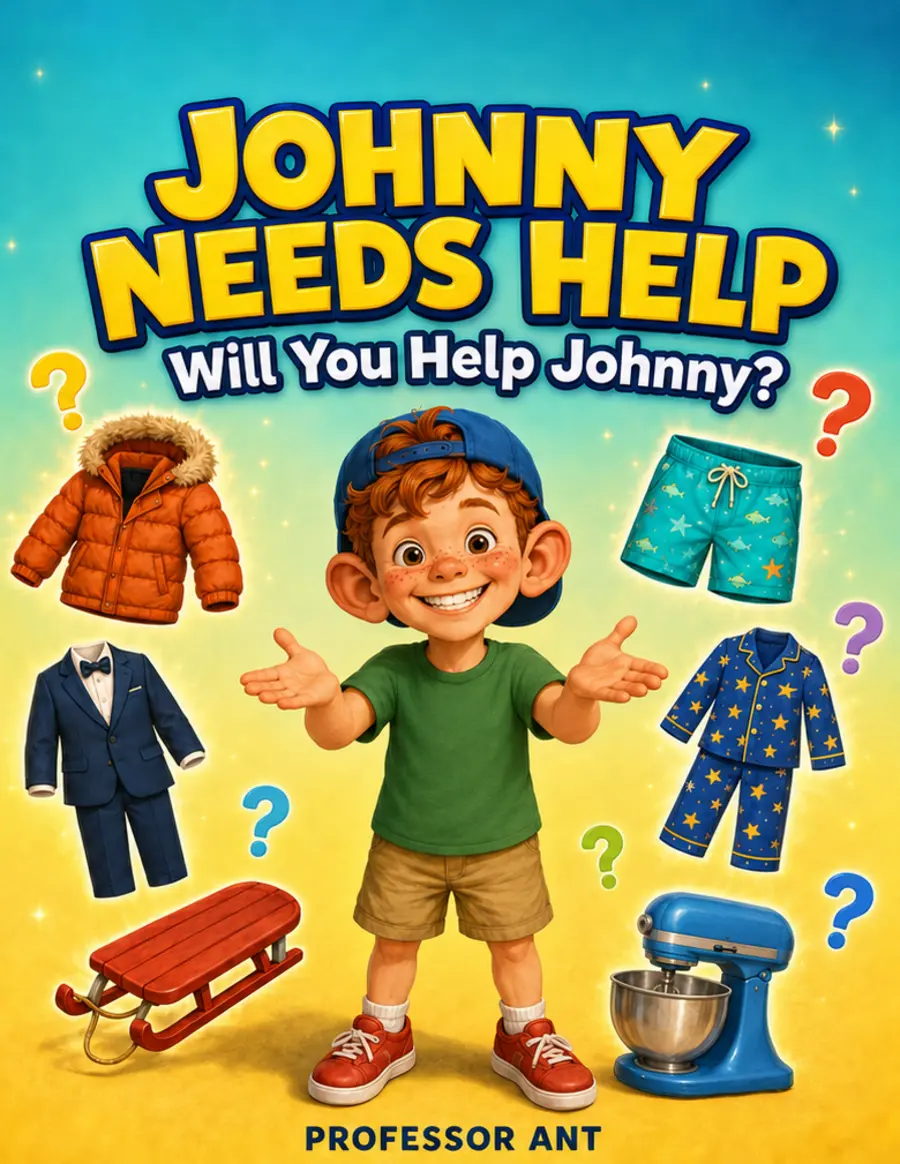
The first Needs Help! book
Johnny introduces the series through everyday decisions about clothes, food, activities, and what someone truly needs. Young readers choose from practical, imaginative, and silly possibilities, then explain their thinking.
Amazon Bestseller
Chloe encounters ordinary childhood moments involving family, food, school, public behavior, and responsibility. Young readers decide what she might do, then tell the grown-up why.
Buy Amazon bestseller Chloe Needs Help!
How it works
Because the problem belongs to a character, children can explore ideas without feeling tested. Their choices give adults a natural way to ask questions, listen, and help them think through what might happen next.
A familiar problem gives the child something concrete to consider.
Six choices make participation easy, surprising, and fun.
One simple question builds vocabulary, reasoning, prediction, and empathy.
A funny answer creates connection and bonding. A wrong answer creates discovery. The child can do it their own way while the grown-up guides the conversation.
Meet the children
Choose clothes, food, activities, and responses as Johnny moves through an eventful day.
Help Jenny with routines, family moments, winter weather, and everyday disagreements.
Explore clothing, sports, food, and family choices with Siena and her two moms.
Help Mariah pack, say goodbye, travel, and settle into a new home.
Join Mateo in Mexico as he prepares to welcome and help care for a new baby sister.
Follow Chloe through Paris as family, school, food, and public moments invite six possibilities.
Buy Chloe on AmazonHelp baby Sofia and her grooming-shop family care for themselves, their home, and their dogs.
Support a legally blind sixth grader as he handles school, color, teasing, and a changing friendship.
Ask which choice the child wants, then ask one more question: “Why?”