
LOVE IT OR DOUBLE YOUR MONEY BACK!

Today’s children are growing up in a world where information is abundant and instantly accessible. The challenge is no longer finding answers, but learning how to evaluate them. We believe one of the most important skills a child can develop is the ability to observe carefully, ask thoughtful questions, think critically, and distinguish reliable information from unsupported claims. Our goal is not simply to teach facts, but to help children develop the habits of mind that support sound judgment, lifelong learning, and informed decision-making.

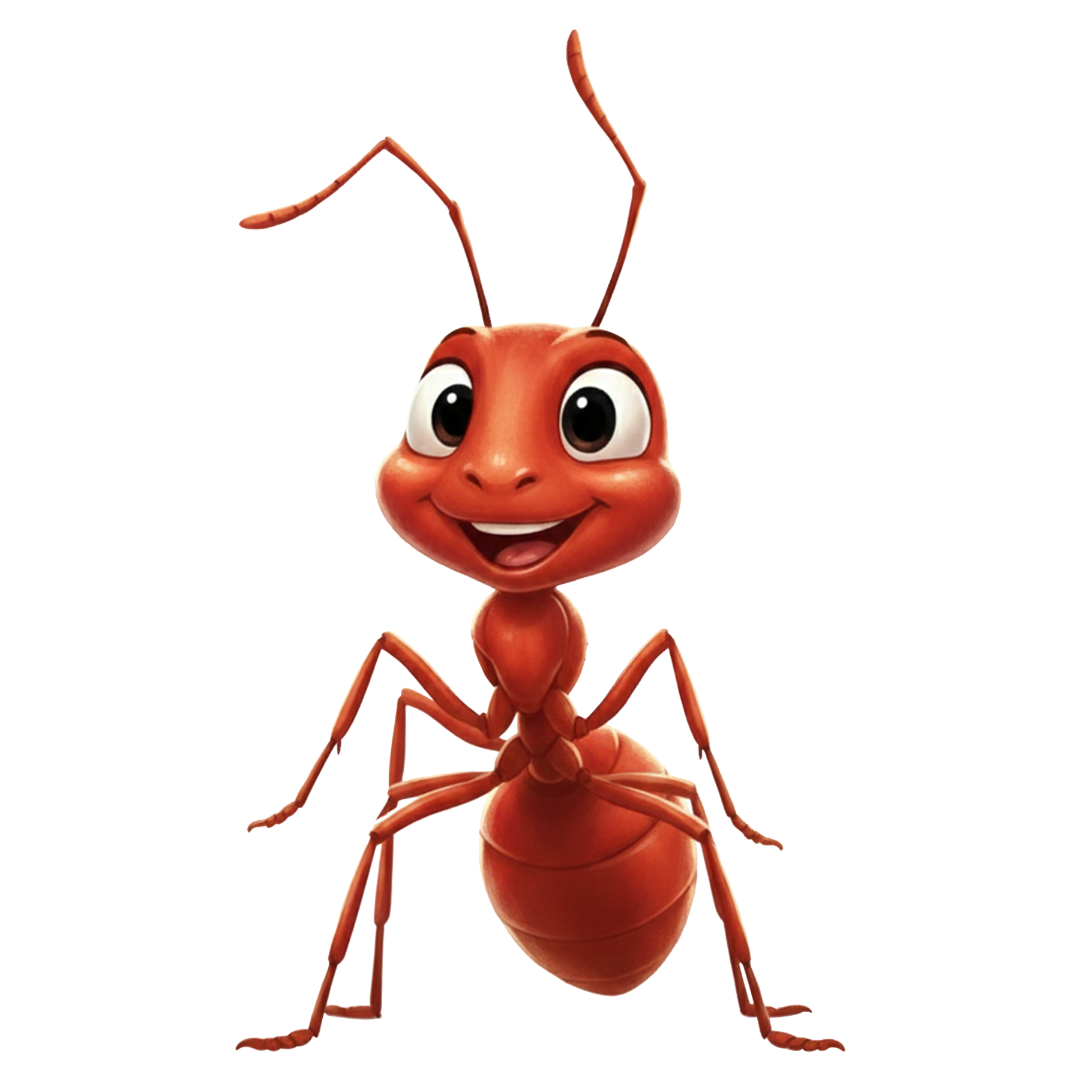
Instead of capitalizing on a young child’s unique learning ability, we turn them into a couch potato by presenting them with obvious answers. Professor ANT awakens that ability by intentionally creating a small disruption in the child’s understanding and invites them to repair it. That is the most original part of our approach. The absurdity creates engagement, humor, and curiosity. It develops children’s imaginations while training them to stay focused, recognize when something does not make sense, and search for an explanation.

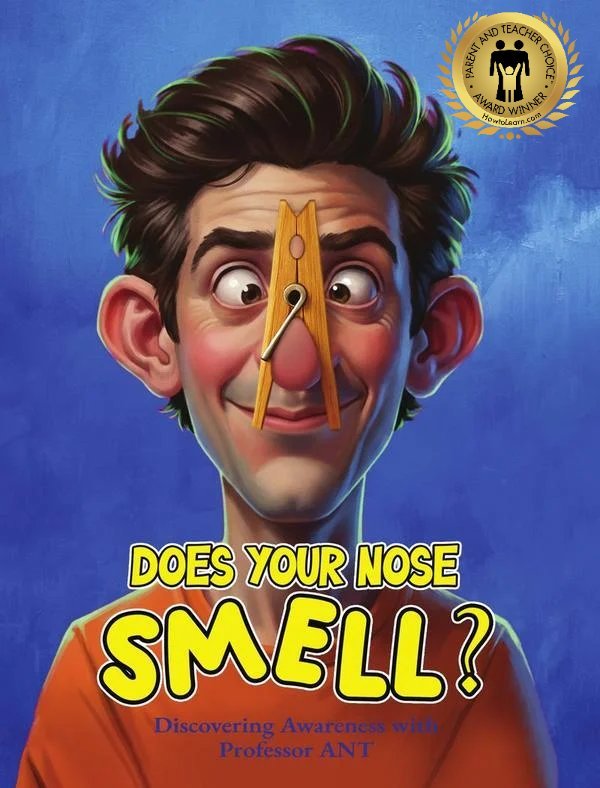
“My 7yr-old son read the book “Does Your Nose Smell?” and he LOVED it. He said it’s the best book he’s read.”
100% 5 Star
Rating on Amazon

How to Get the Most from These Early Books with Young Children
Read the story with energy and momentum, focusing primarily on the larger text. Don’t stop to explain every strange picture or idea. You may skip the smaller text during the first reading and return to it later.
After finishing the story, spend about five minutes looking through the book together. Ask your child what they notice, encourage their questions, and point out details they may have missed—but give them time to form their own ideas before explaining everything.
Then allow your child 10–15 minutes alone with the book before a nap or bedtime. They can explore the pictures, revisit their favorite pages, and think at their own pace. Following this experience with sleep may help the brain organize and retain what was learned.
This gives parents a practical way to support curiosity instead of explaining the mystery away too quickly.
It encourages several valuable habits:
- The energetic first reading holds attention and lets the surprises accumulate.
- Looking together invites observation, questions, conversation and builds bonding.
- Waiting before explaining gives the child time to wonder, guess, and form ideas.
- Independent exploration lets the child discover details without an adult directing every thought.
- Quiet time before sleep gives the experience space to settle rather than immediately replacing it with more stimulation.
The most important instruction is: “Give them time to form their own ideas before explaining everything.” That is where curiosity becomes active thinking.
Following this experience with sleep may give the brain time to organize and strengthen the new information while allowing curiosity to continue developing.
Reality doesn’t lie.
Taste a Kitten.
“Taste a Kitten” teaches children that when something doesn’t make sense, they shouldn’t simply accept it.
They should question it, call it out, and use what they know about reality to help correct it.
A parent’s job is not to eliminate every problem or leave a child to face it alone, but to help the child understand what is happening and guide them toward a solution. This is why introducing safe obstacles while you are there to protect and guide them can sometimes be a smart move. The goal is not dependence or forced independence—it is guided independence. Help your child learn how problems are solved.

HEAD BONES HEART

SKIN SWEAT FEET

HAIR KNEE BRAIN
A LOAF OF BREAD


RECYCLE BIN


You Care


In the Rain


Compassion, resilience, true friendship.

Learn about your brain.


- Children need manageable difficulty.
- Confidence must be based on real ability and growth.
- Normal decency should not be inflated into heroism.
- Parents must protect their credibility.
- Honesty must be demonstrated, expected, and positively reinforced.
Overprotecting children does not prepare them for life. Children need manageable risks, disappointment, frustration, consequences, and problems they can learn to solve. Removing every difficulty denies them the opportunity to develop judgment, confidence, and self-control. I believe we should intentionally expose them to safe, manageable risks whenever possible.
Example: While at the airport, I explained to my six-year-old granddaughter how the airport was laid out and asked her to find our gate. When she needed to use the restroom, I stayed in my seat and watched. When she exited the restroom, she went in the wrong direction, stopped, and turned around. I asked her how she knew she was going the wrong way. She said, “I looked at the signs.”
We also do children no favors by telling them they can accomplish anything. Human beings are capable of amazing things, but none of us can do everything. Ability, health, circumstances, resources, and opportunity create real limitations—and that is okay.
Real confidence does not come from believing you can do everything. It comes from knowing you can learn, improve, recover from failure, and discover where your abilities are strongest. Understanding your limitations is part of developing your strengths. Confidence should be anchored in reality, not automatic praise.
I also reject describing every natural human ability as a “superpower.” That framing can suggest that our ordinary human abilities are not valuable unless we inflate them into something magical. Kindness is not a superpower. Basic kindness is a human responsibility and something society should reasonably expect from us. You are not a superhero simply because you treat other people well. Exceptional kindness requiring courage or sacrifice deserves recognition, but ordinary decency should not be treated as extraordinary.
Trust and consistency are essential to the development of a healthy mind. Children construct much of their early understanding of reality through their caregivers. Parents are their first guides, so they should treat their credibility as something precious. When those guides are unpredictable or routinely deceptive, the child’s foundation becomes less secure.
That is why I reject presenting Santa Claus, the Easter Bunny, and other fictional characters as physical realities. We can give children imagination, wonder, celebration, and pretend play without deliberately convincing them that fantasy is fact. Manufacturing evidence to support something we know is untrue creates an unnecessary contradiction: we expect children to be honest while demonstrating that adults may deceive them when the deception is considered harmless or enjoyable.
Not every child will experience that discovery as a serious betrayal, but some will feel embarrassed, manipulated, or deceived. If wonder can be created without risking a child’s trust, why take that risk when the lie provides nothing essential? This is when a child can potentially trust friends who told the truth about Santa over their own parents. Friends now guiding them with no more ability than they have to guide themselves.
Honesty must be expected. When a young child admits doing something wrong, the parent has two responsibilities: reinforce the honesty and address what happened. In early childhood, reinforcing the decision to tell the truth is often more important than emphasizing the mistake. You are building the habit of coming to the parent with reality instead of hiding it.
If the child accidentally breaks something, anger accomplishes very little. The child should first hear:
“Thank you for telling me the truth. That was the right thing to do.”
Then the parent can teach the lesson:
“It was an accident, but let’s think about how you can pay closer attention and handle things more carefully next time.”
The child learns three separate things: accidents happen, honesty is valued, and greater care can prevent similar accidents. They leave with responsibility, not shame—and with more reason to tell the truth next time.
This is not softness. It is creating a relationship in which reality can always be faced. A child should know both that honesty is required and that telling the truth is safe.
“Most children’s books insult a child’s intelligence.”

These books are designed to keep your child actively engaged, not just passively reading. Through simple wordplay and carefully placed challenges, they create moments where your child has to stop and think to understand what’s happening. That small moment of confusion isn’t a problem—it’s the point. It grabs their attention, keeps them focused, and encourages them to figure things out on their own. As they work through it, they naturally test their ideas, adjust, and come to the answer themselves. This kind of interaction builds real understanding, not just memorization, and that’s why children enjoy coming back to the book again and again—each time noticing more and thinking a little deeper.
Buy the books here

Buy the books here
LOVE IT OR DOUBLE YOUR MONEY BACK!
Image from 1985

From the Author
I’m Anthony, a single dad with full custody of my two oldest daughters. A broken system once called me “stupid, lazy and didn’t apply myself” but one teacher proved every child has potential. That’s why I created this series.
Education can be exciting when done the right way
For the next category in our series, we introduce Professor CAN’T—Professor ANT’s troubled twin brother, who always seems to make the wrong choices. Through his mistakes, children will strengthen their critical-thinking and decision-making skills.

.