Discovering Awareness with Professor ANT


Children don’t need us to do their thinking for them.
Professor ANT begins with a different assumption about young children: They are capable of far more thinking than we usually ask them to do. From the earliest books, children are not given a simplified version of the world where everything has one obvious answer and the adult immediately tells them whether they are right or wrong. They are given something to explore. A choice. A contradiction. A ridiculous possibility. A situation that may not make immediate sense. Something unexpected in a picture. Something that invites them to stop, react, question, and figure out what they think. The adult is there to guide the exploration—not to supply the conclusion.
Fun is the point. Education is the intentional side effect.
THE METHOD STARTS WITH ONE IMPORTANT CHANGE
Stop rushing to give children the answer.
Young children are constantly being told what things are, how things work, what the correct answer is, and when they are wrong. Professor ANT deliberately interrupts that pattern. When a child gives an answer, the adult does not immediately say: “That’s right.” “That’s wrong.” “No, try again.” Instead, the answer becomes something to explore. If the child chooses a sensible answer, explore it. If the child chooses an unusual answer, explore it. If the child deliberately chooses the silliest answer on the page, explore that too. What would happen? Would it work? Why? What might happen next? Would someone get hurt? Would it solve the problem? Is there another possibility? Does the child want to keep that answer or change their mind? The point is not to protect children from being wrong. The point is to make being wrong safe enough to investigate.


A WRONG ANSWER CAN BE MORE VALUABLE THAN THE RIGHT ONE
A correct answer may end the conversation. A wrong answer can begin one. Professor ANT uses wrong answers, ridiculous possibilities, contradictions, unexpected pictures, and competing choices because they give children something to work out. The adult does not show disappointment. The child is not made to feel that they failed. And the adult does not immediately replace the child’s thinking with the adult’s answer. Instead, the child gets to follow the idea. Sometimes they will discover for themselves why it does not work. Sometimes they will defend it. Sometimes they will discover another answer nobody expected. Sometimes they will change their mind. And sometimes the adult may change theirs. That is very different from memorizing the answer someone else already decided was correct.
THE CHILD IS ALLOWED TO THINK THEIR OWN WAY
Professor ANT is not trying to train children to give the response adults expect. A child may laugh. Argue. Choose the ridiculous answer. Notice something completely different from what the adult noticed. Ask a question that has nothing to do with where the adult thought the conversation was going. That is not a distraction from the method. That is the method working. Children are given permission to react honestly to what they see and then explore that reaction. The goal is not identical answers. The goal is an active mind.

PARENT IN CONTROL. CHILD IN CHARGE.
The parent controls the environment and the choices that are available. The child is in control of their decisions and their person.
The parent sets the boundaries, provides appropriate options, and keeps the situation safe. The child chooses from those options, decides what they think, and is allowed to respond as themselves.
With the books, the parent may choose three books to offer. The child decides which one to read.
The same principle extends beyond the books: the parent controls the situation without trying to control the child.
The parent controls the environment and the choices. The child controls their decisions and their person.

THE BOOKS CHANGE AS THE CHILD GROWS
The method remains consistent, but what the child is able to explore becomes broader. A one-year-old and a ten-year-old should not be given the same situation. But neither child needs the world stripped of complexity before they are allowed to think about it. Professor ANT introduces children to increasingly rich situations, ideas, experiences, relationships, and consequences as they grow. The books do not become “harder lessons.” The child simply becomes capable of taking the exploration farther.

AGES 1–5
NEEDS HELP!
The Needs Help! series begins by letting the child make decisions for someone else. Johnny has a problem. Jenny needs help. Mariah has to decide what to do. The child is given several possibilities. Some are reasonable. Some are questionable. Some are ridiculous on purpose. The child chooses. And then the important part begins. Why that one?What happens if Johnny does that? How might Jenny feel? Would that actually solve Mariah’s problem? What happens next? The child can keep the answer, change it, laugh at it, defend it, or discover another answer entirely. Because the situation belongs to another character, young children can explore choices and consequences without feeling personally judged. There is no score. There is no disappointment. There is no need to guess which answer the grown-up wants. The child gets to think.
AGES 4–8
DISCOVERING AWARENESS
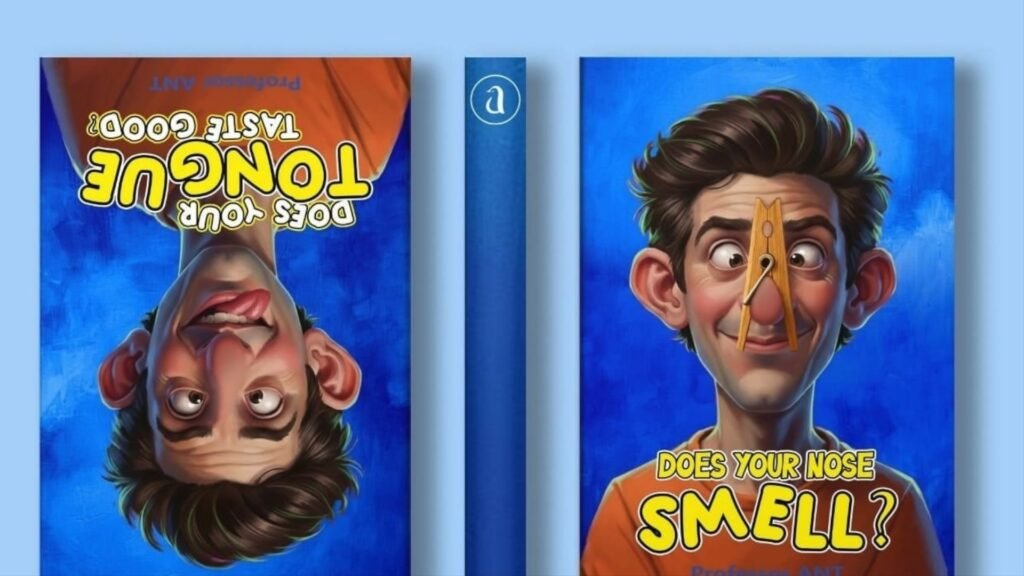
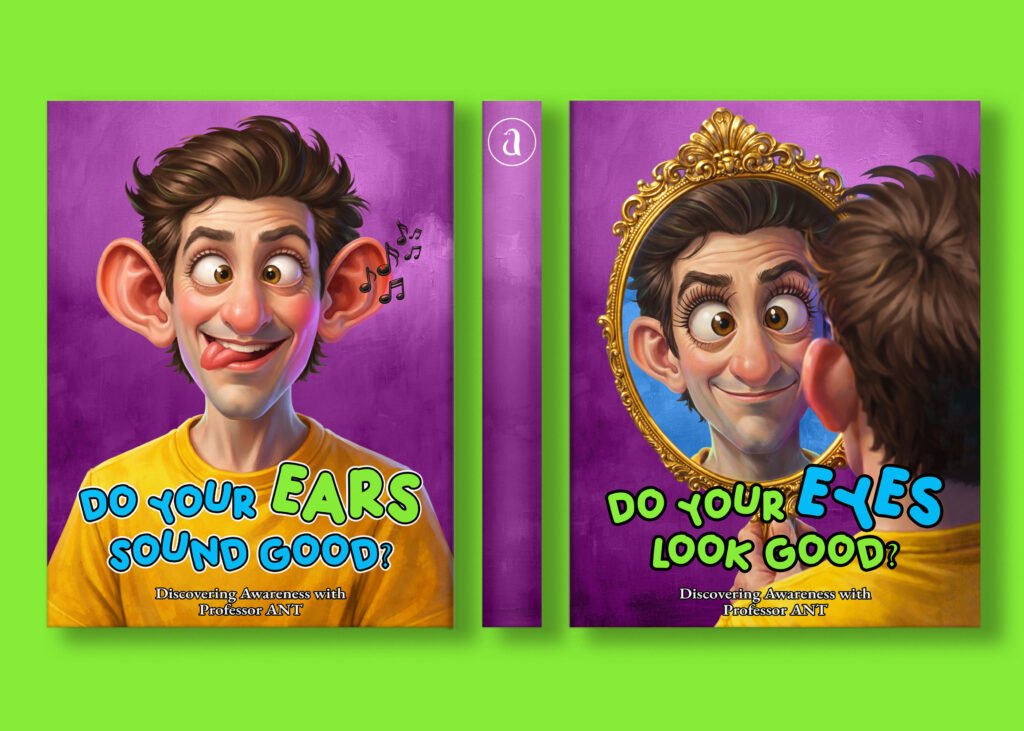
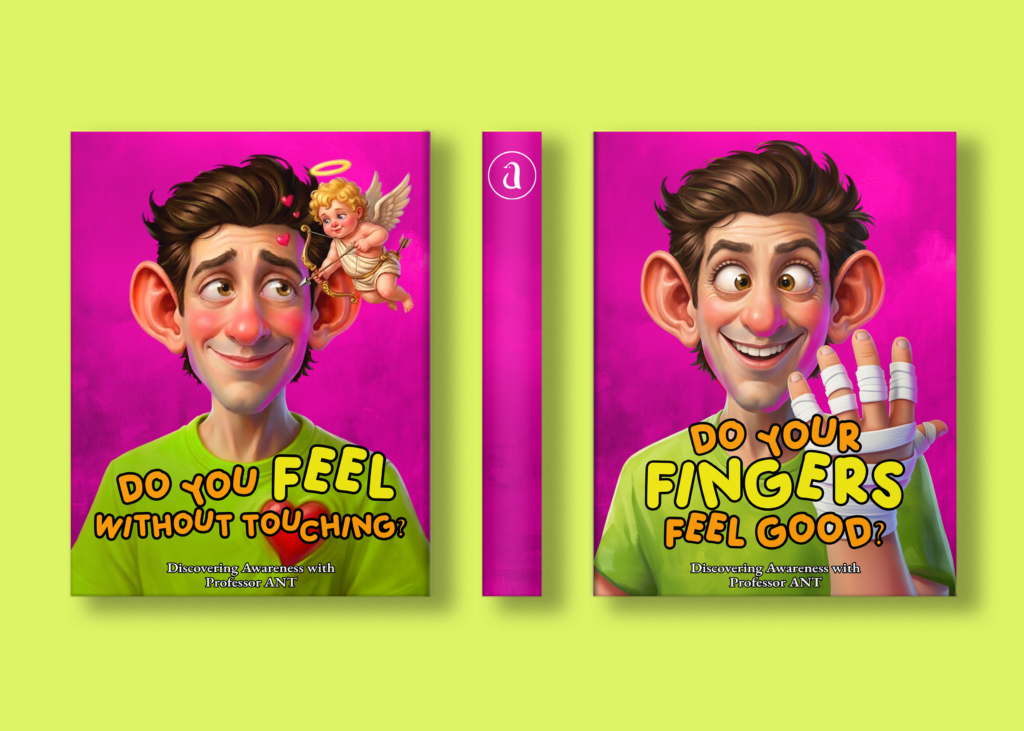
As children become more aware of the world around them, Professor ANT begins challenging things they may have stopped noticing precisely because those things are so familiar. Their nose. Their tongue. Their eyes. Their ears. Touch. Feelings. The books begin with experiences the child already has—but approach them from an unexpected direction. Consider the title:
DOES YOUR NOSE SMELL?
The words themselves create a tiny problem. Of course your nose smells. But does your nose smell? The absurdity interrupts the automatic answer. For a moment, something familiar becomes worth thinking about again. Professor ANT repeatedly creates those moments. Not to trick children. To wake up their attention.
SENSES → EXPERIENCE → UNDERSTANDING → REALITY
Children first encounter the world through experience. They see. Hear. Touch. Smell. Taste. Feel. Then they begin interpreting those experiences. Professor ANT encourages children to notice the difference between what they experience, what they think it means, and what else might explain it. That begins with very ordinary things. Why did something look different? Why did a sound change? Why does food taste different when your nose is blocked? Why does something feel frightening even when nothing touched you? The child is not handed a lecture. They are given something worth wondering about. And then they explore.

AS CHILDREN GROW, THE SITUATIONS GROW WITH THEM
Bigger consequences. More possibilities. Same freedom to think.
Older children can explore situations with more moving parts. Responsibility. Consequences. Relationships. Independence. Promises. Risk. Other people’s feelings. Their own assumptions. And Professor ANT can become even more ridiculous. In Johnny Asks for a Tiger, the premise is absurd. That is exactly why it works. The child is not sitting down for a lesson about responsibility. They are wondering what would happen if Johnny actually got a tiger. The ridiculous possibility creates the opening. Then the child starts doing the thinking. What would it eat? Where would it sleep? Could Johnny actually take care of it? What happens when wanting something and being responsible for it become two different things? The story remains fun. The thinking happens because of the fun, not instead of it.
PROFESSOR ANT USES DISRUPTION ON PURPOSE
Most educational material tries to remove confusion. Professor ANT sometimes creates a little. A strange title. A picture that does not quite match expectations. A ridiculous answer. An idea that sounds right until you think about it. A situation with more than one possible explanation. That moment of disruption creates an opening. The child notices. Then the child tries to repair the inconsistency. That repair requires thinking. Professor ANT does not need to announce: “Now we are practicing critical thinking.” The child is already doing it.
YOU DO NOT NEED TO TEACH THE BOOK
You do not need a lesson plan. You do not need to explain every page. And you do not need to turn every funny moment into an educational discussion. Sometimes the child should simply laugh. Sometimes they will want to move on. Sometimes one strange detail may create a ten-minute conversation. Follow the child’s engagement. Ask questions when they open possibilities. And stop before exploration starts feeling like work. Useful questions are often very small: Why? What happens then? Could that really work? What else could happen? What did you notice? Do you still think that? The purpose is not to interrogate the child. It is to give their thinking somewhere to go.
THERE IS NO PROFESSOR ANT ANSWER SHEET
The adult may know what answer seems most reasonable. That does not mean it has to be announced. Let the child get there. Or let the child surprise you. Children need places where changing their mind is not embarrassing. Where being wrong does not produce disappointment. Where ridiculous ideas can be tested without real-world consequences. Where the adult is genuinely interested in how they arrived at an answer, not merely whether it matches the expected one. Professor ANT creates that space.

WHERE SHOULD WE BEGIN?
AGES 1–5
Start with The Basic Series and Johnny Needs Help! Let the child choose for Johnny. Then explore wherever that choice takes you.
AGES 4–8
Start with Does Your Nose Smell? / Does Your Tongue Taste Good? Take something the child thinks they already understand and make it interesting again.
GROWING READERS
Choose the situation that interests them. The books can move into bigger questions, bigger consequences, and more independent reasoning while keeping the humor and absurdity that make Professor ANT Professor ANT.
THE GOAL IS NOT TO CREATE CHILDREN WHO KNOW MORE ANSWERS
It is to create children who are willing to think.
To notice when something does not make sense. To ask another question. To consider consequences. To listen to another possibility. To explain what they think. To change their mind without feeling defeated. To trust themselves enough to explore an idea before looking to someone else for the answer. And to do all of that without turning childhood into schoolwork.
Fun is the point. Education is the intentional side effect.
Once a Professor ANT child, always a Professor ANT child.
