
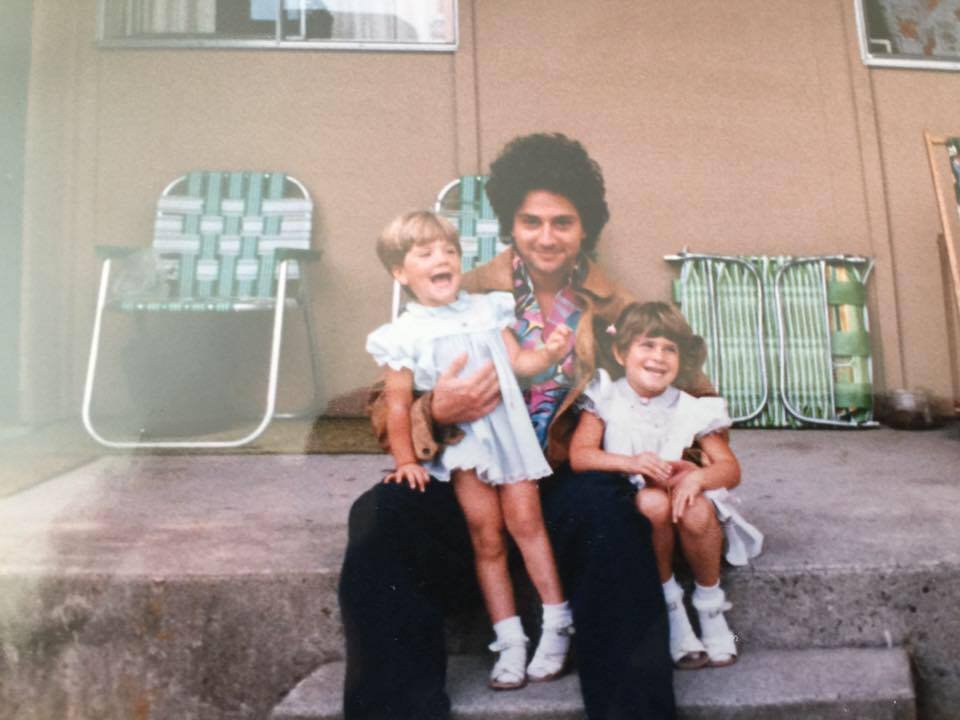
Hi! I’m Anthony — single dad, entrepreneur, and creator of the Discovering Awareness children’s learning series.
At a very young age, I became the full-time father of my two oldest daughters and was granted complete custody. Their mom rarely showed up, even for weekend visits. With help from my family, I made a promise to myself: giving my girls the best possible start in life would be the most important thing I’d ever do. Every choice since then has been shaped by that commitment.
I’m also a product of a broken education system. From early elementary school, teachers labeled me “stupid” and placed me in slower classes. My grades dropped from Cs to Ds, and instead of getting real help, I was told I was lazy and didn’t apply myself.
But one teacher saw something different. In 6th grade, she invited me to join her after-school math class for gifted 8th graders preparing for scholarships to one of Seattle’s top private high schools. I scored the highest in the entire school — beating straight-A students — and won a scholarship I was too young to use. That moment proved to me that potential exists in every child, no matter what the system says.
As an adult and father, I refused to let any other kids feel the way I did. That’s why I created Discovering Awareness — a complete learning system designed to work for every type of learner by reactivating the natural way we’re all born to discover the world.
It starts with our senses (sight, sound, touch, taste, smell) — the foundation of how children naturally explore life. By tying those senses to emotions, kids build genuine self-awareness and develop critical thinking skills organically, without force or rote memorization.
My mission is simple: to give parents like you the tools I wish I’d had — so your children can grow confident, curious, and ready for anything.
If you’re looking for a better way to help your kids truly learn and thrive, you’re in the right place. I’d love to help you on this journey.
Anthony Creator of Discovering Awareness (serving families across the US) 📧 Ron@professsorant.com 📲 1 (839) 213-0090 Follow along: https://www.youtube.com/channel/UC8Vd63Ro6Ywjx1K3SASzcXA
- Children need manageable difficulty.
- Confidence must be based on real ability and growth.
- Normal decency should not be inflated into heroism.
- Parents must protect their credibility.
- Honesty must be demonstrated, expected, and positively reinforced.
Overprotecting children does not prepare them for life. Children need manageable risks, disappointment, frustration, consequences, and problems they can learn to solve. Removing every difficulty denies them the opportunity to develop judgment, confidence, and self-control.
We also do children no favors by telling them they can accomplish anything. Human beings are capable of amazing things, but none of us can do everything. Ability, health, circumstances, resources, and opportunity create real limitations—and that is okay.
Real confidence does not come from believing you can do everything. It comes from knowing you can learn, improve, recover from failure, and discover where your abilities are strongest. Understanding your limitations is part of developing your strengths. Confidence should be anchored in reality, not automatic praise.
I also reject describing every natural human ability as a “superpower.” That framing can suggest that our ordinary human abilities are not valuable unless we inflate them into something magical. Kindness is not a superpower. Basic kindness is a human responsibility and something society should reasonably expect from us. You are not a superhero simply because you treat other people well. Exceptional kindness requiring courage or sacrifice deserves recognition, but ordinary decency should not be treated as extraordinary.
Trust and consistency are essential to the development of a healthy mind. Children construct much of their early understanding of reality through their caregivers. Parents are their first guides, so they should treat their credibility as something precious. When those guides are unpredictable or routinely deceptive, the child’s foundation becomes less secure.
That is why I reject presenting Santa Claus, the Easter Bunny, and other fictional characters as physical realities. We can give children imagination, wonder, celebration, and pretend play without deliberately convincing them that fantasy is fact. Manufacturing evidence to support something we know is untrue creates an unnecessary contradiction: we expect children to be honest while demonstrating that adults may deceive them when the deception is considered harmless or enjoyable.
Not every child will experience that discovery as a serious betrayal, but some will feel embarrassed, manipulated, or deceived. If wonder can be created without risking a child’s trust, why take that risk when the lie provides nothing essential? This is when a child can potentially trust friends who told the truth about Santa over their own parents. Friends now guiding them with no more ability then they have to guid themselves.
Honesty must be expected. When a young child admits doing something wrong, the parent has two responsibilities: reinforce the honesty and address what happened. In early childhood, reinforcing the decision to tell the truth is often more important than emphasizing the mistake. You are building the habit of coming to the parent with reality instead of hiding it.
If the child accidentally breaks something, anger accomplishes very little. The child should first hear:
“Thank you for telling me the truth. That was the right thing to do.”
Then the parent can teach the lesson:
“It was an accident, but let’s think about how you can pay closer attention and handle things more carefully next time.”
The child learns three separate things: accidents happen, honesty is valued, and greater care can prevent similar accidents. They leave with responsibility, not shame—and with more reason to tell the truth next time.
This is not softness. It is creating a relationship in which reality can always be faced. A child should know both that honesty is required and that telling the truth is safe.
