
Back-and-forth talk builds young brains
It’s not just how many words a child hears. It’s how many conversations they take part in.
What they did
Researchers at MIT recorded the everyday language at home of 36 children ages 4 to 6 over two full days. Then they used brain scans (fMRI) to see how each child’s brain responded while listening to stories.
What they found
Children who had more back-and-forth “conversational turns” with adults showed stronger activity in Broca’s area, a key language center of the brain. They also scored higher on language tests. Conversation mattered more than the total number of words a child heard, and the link held regardless of family income.
What it means for your child
Every page of the Needs Help! books is a conversation. You ask, your child chooses, you ask “Why?”, and your child explains. That back-and-forth is exactly what this study connects to a stronger language brain.
How Professor ANT books use this
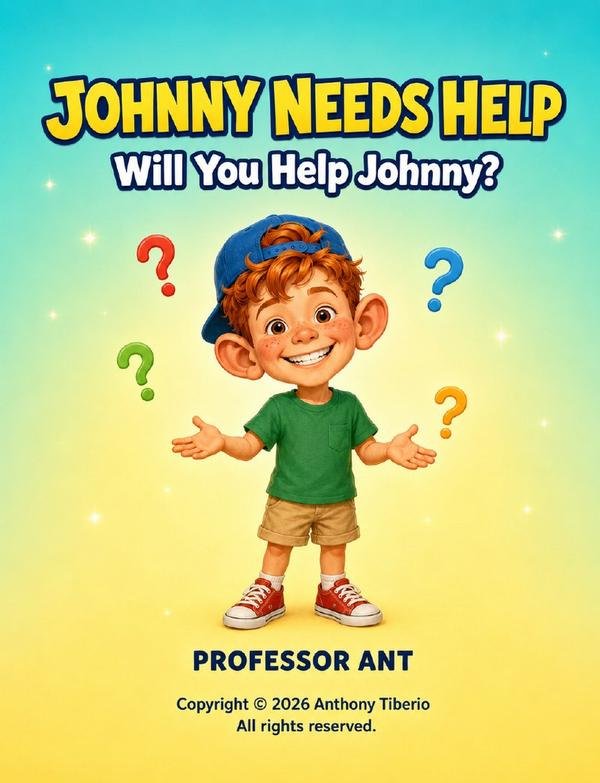
In Johnny Needs Help!, your child decides what Johnny should wear in the snow, or bring for swimming, bedtime, or a wedding, from sensible to totally silly. You ask “Why that one?” and your child explains. Every page is a back-and-forth turn. Does Your Nose Smell? works the same way: one dad wrote in his Amazon review that it had “lots of questions he could respond to.”


Related: Interactive reading speeds up language →
Source: Romeo, R. R., Leonard, J. A., Robinson, S. T., West, M. R., Mackey, A. P., Rowe, M. L., & Gabrieli, J. D. E. (2018). Beyond the 30-million-word gap: Children’s conversational exposure is associated with language-related brain function. Psychological Science, 29(5), 700–710. Original article
Summary written by Discovering Awareness. The study did not test Professor ANT books; it supports the method behind them.
