When kids are invited to be helpers, they help more
Young children take on who they are, not just what they do.
What they did
Researchers at Stanford University worked with children ages 3 to 6. Some children heard about “helping.” Others heard about being “a helper.” Then the children were given chances to help, like picking up toys.
What they found
Children invited to “be a helper” helped more than children asked “to help.” A small change in words, from an action to an identity, made a real difference.
What it means for your child
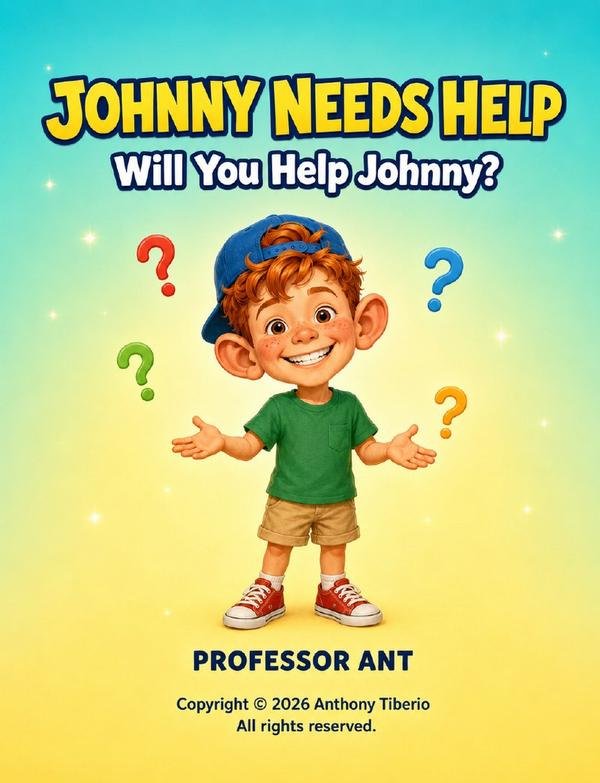
In the Needs Help! books, your child is the helper. Johnny needs them. Starting this young, helping and thinking become part of who your child is, not just something they did once.
How Professor ANT books use this
Every Needs Help! book asks your child one question on the cover: “Will you help Johnny?” Your child becomes Johnny’s helper, then Jenny’s, Siena’s, Mariah’s, Mateo’s, Chloe’s, and Todd’s. Book after book, they practice being a helper and a thinker, at the age when it becomes part of who they are.


Related: Back-and-forth talk builds young brains →
Source: Bryan, C. J., Master, A., & Walton, G. M. (2014). “Helping” versus “being a helper”: Invoking the self to increase helping in young children. Child Development, 85(5), 1836–1842.
Summary written by Discovering Awareness. The study did not test Professor ANT books; it supports the method behind them.
