It starts long before they read a single word.
Most children learn to read simple books between ages 6 and 7, usually by the end of first grade. Some start at 4 or 5. Some click later, at 8 or 9. All of that is normal.
But here’s what most parents don’t realize: reading doesn’t start when a child sounds out their first word. It starts years earlier, on your lap.
Reading starts with talking
A child doesn’t learn to love books by listening quietly while a grown-up reads. They learn by being part of the story.
That’s interactive reading. Instead of just reading the words, you stop and talk. Ask, “What do you think happens next?” “Why is he sad?” “Which one would you pick?” Point to the pictures. Let your child answer, guess and explain.
Researchers call this dialogic reading, and studies have found that children read with this way build bigger vocabularies and stronger language skills. But you don’t need a research paper to see it work. Watch your child’s face when they get to help tell the story.
Make them part of the book
That’s exactly how I designed the Needs Help! books. Your child isn’t just listening. They’re deciding. What should Johnny wear? Where should he go? They point, choose and explain long before they can read the words themselves.
A child who has spent years talking about books doesn’t see reading as a chore. They see it as a conversation, and they can’t wait to join in.
What about the slow reader, or the child who hates reading?
Some kids struggle. Some just don’t like it. And often the books we hand them make it worse. They’re either too hard, or they look like they’re for little kids. An 8-year-old who reads slowly doesn’t want to be seen with a baby book.
That’s why I created the Senses Series.
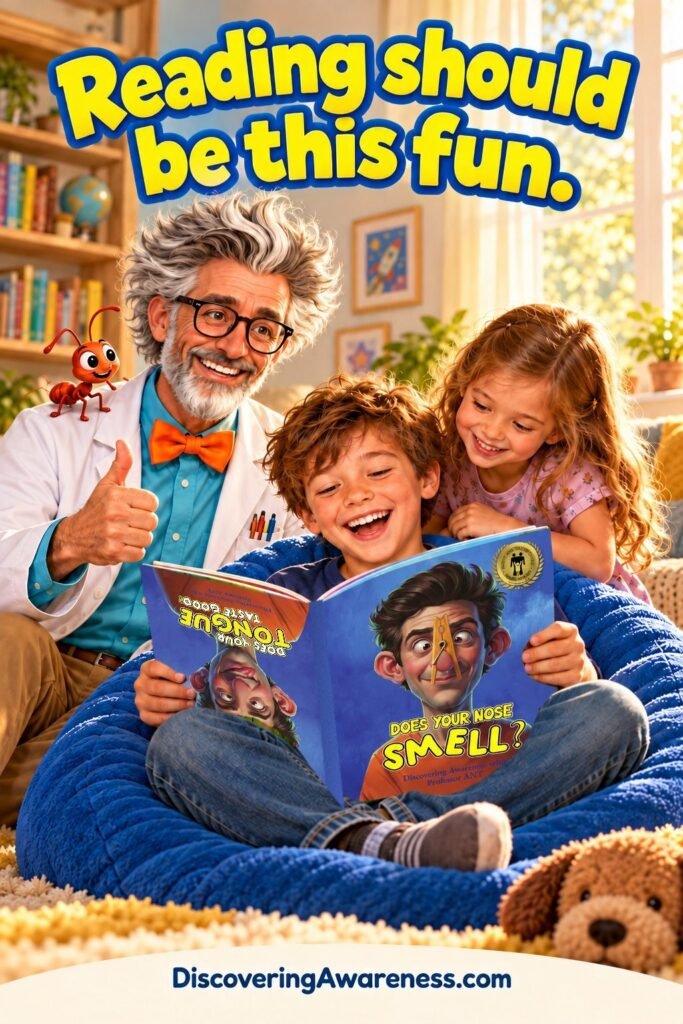
The books are easy to read, but they don’t look or feel like “easy readers.” They’re full of funny facts, real science and jokes kids actually want to share. Does Your Nose Smell? starts with a question that makes kids laugh, then lets them figure out the answer. Flip it over and you get a second book, Does Your Tongue Taste Good?, where kids meet Sweet, Salty, Sour, Bitter and Umami.
A child reading it isn’t thinking, “This is a book for slow readers.” They’re thinking, “Does my nose smell? No, my nose doesn’t smell. Wait, of course it does!” That’s when reading stops being work and starts being fun.
Very few books are made for exactly this child: easy enough to read, smart enough to respect them, and fun enough to keep them turning pages.
Reading is a habit, not a race
Don’t worry about the exact age. Worry about the habit. Read together often. Make it a conversation. Let your child lead. And give them books that make them want to come back for more.
A child who loves books will learn to read. A child who’s pushed too hard may learn to hate it.
— Professor ANT
Try it with Does Your Nose Smell? Easy to read, fun to share, and made for curious kids ages 4–8, and older kids who’d rather do anything than read. Get it on Amazon → or see all Professor ANT books.
