Is your child ready? It’s not about letters and numbers.
Preschool is usually for children ages 3 to 5. Kindergarten usually starts at age 5. In most U.S. states, a child must turn 5 by a cutoff date, often around September 1, to start that school year. Rules vary, so check with your local school district.
But the bigger question most parents are really asking is: is my child ready?
Ready isn’t about flash cards
A lot of parents think school readiness means knowing the ABCs, counting to 20 and writing their name. Those are nice. But the kids who do best in school aren’t the ones who memorized the most. They’re the ones who can think.
Can your child make a choice? Can they explain why? Can they follow directions, handle a problem and get along with others? That’s what makes the first day, and every day after, go well.
Build a thinker, not a memorizer
The best way to get your child ready for school is to give them practice thinking before they ever walk into a classroom. That’s exactly what my books are made for.
In the Needs Help! books, your child helps a character like Johnny, Chloe or Mateo decide what to do. They choose, explain and talk it through, practicing judgment, kindness and problem-solving from age 1.
In the Senses Series, your child figures out how their nose, tongue, eyes and ears really work. They learn to wonder, ask and find answers instead of waiting to be told.
A child who has done that for years walks into school already knowing how to learn.
Help your child talk to people
Here’s one more thing that made a huge difference in my family, and it’s free.
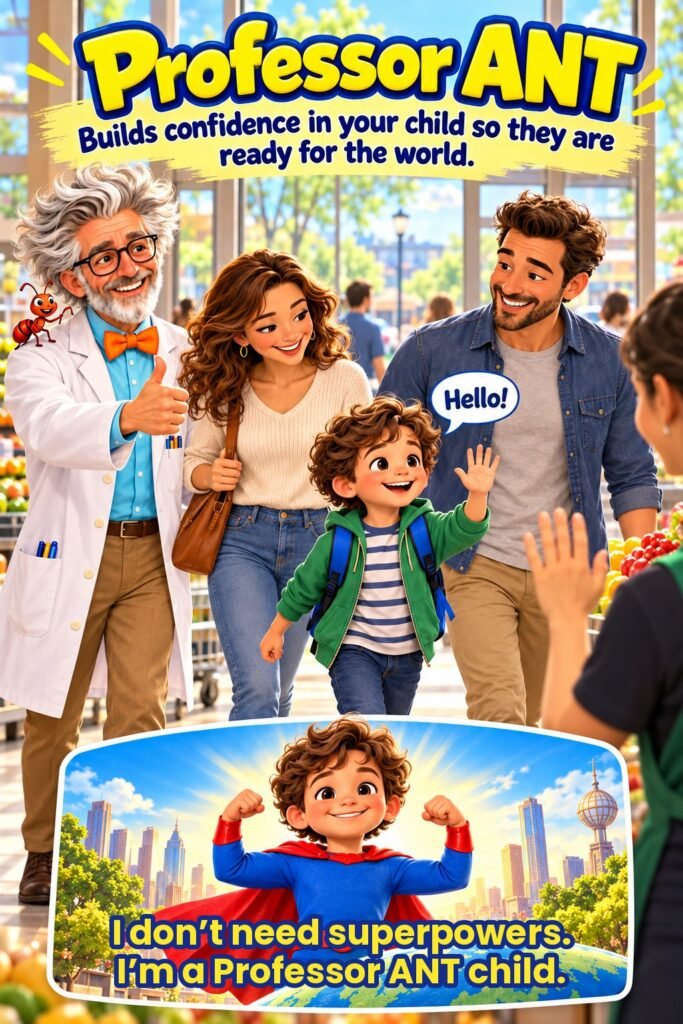
My grandson was very shy. He only talked to family. So I started taking him to the store with me. I never told him to say hi. I never said, “Be polite.” I just said hello to people myself, smiled, and treated everyone kindly.
He watched. And on his own, he started joining in. Nobody told him to. He saw that it was a nice way to treat people, and he decided he wanted to do it too.
When it was time to pay, I handed him the money and let him make the purchase himself. At the pool, I’d chat with the adults sitting near us and leave room for him to join in.
In a very short time, he started introducing himself to people all on his own. His confidence shot up. And when his first day of school came, it was so much easier for him.
Had I said, “We’re going to the store, now say hi to people,” he probably never would have. A child who is told what to do follows orders. A child who decides for himself owns it. That’s the idea behind every one of my books: don’t tell your child how to behave. Let them tell you.
You can do the same:
- Be the example. Say hello to cashiers, neighbors and other parents, and let your child decide to join in.
- Hand them the chance. Let them order their own food or pay at the counter.
- Don’t push. If they’re not ready today, that’s fine. Keep showing them.
Always do this with you right there. The goal isn’t to send your child off to talk to strangers alone. It’s to show them that being kind to new people is safe and normal when you’re by their side.
The best head start
You don’t need expensive programs to get your child ready for school. Talk with them. Let them make choices. Let them figure things out. Let them practice talking to people with you by their side.
Do that, and your child won’t just be ready for school. They’ll be ready for the world.
— Professor ANT
Get your child ready to think. Start with Johnny Needs Help! for ages 1–5, or Does Your Nose Smell? for ages 4–8. See all Professor ANT books →
