Don’t correct it later, develop it now.
Most of us think discipline means getting our child to obey. But a child who only behaves while we’re watching hasn’t learned discipline. They’ve learned to comply until we look away.
Real discipline is a child choosing good behavior because they understand it, not because someone bigger demanded it. And it starts much younger than you think.
Parent in control. Child in charge.
Think about how much of a toddler’s day we decide: when they wake, what they wear, what they eat, where they go, and when they go to bed. Then we tell them how to act, what to say, and when to say sorry. It’s done with love, but it leaves very little room for a child to practice thinking for themselves.
Children do need protection. They can’t see danger the way we can. So the parent controls the boundaries and keeps the child safe. Inside those boundaries, the child gets to practice deciding. You’re not stepping away, and you’re not taking over. You’re guiding.
Start with small choices
Decision-making isn’t a switch that turns on at 13. It’s a muscle, and it grows with use. So start small.
Don’t ask, “What do you want to wear?” Ask, “The red shirt or the blue shirt?” You picked two good options; your child makes the final call. “Apples or grapes?” “This book or that one?” “Blocks first or crayons?”
The limits are your part. The choice is theirs. As their judgment grows, so do their choices.
Give them one chance to change your mind
When I told my kids no, they got one chance to change my mind. They could give me a reason, tell me something I didn’t know, or offer another idea. I listened, and sometimes they convinced me. After that, the answer was final.
They knew they’d be heard, so there was no need to ask a hundred times.
Let them decide for someone else first
“Be nice.” “Share.” “Say you’re sorry.” We say these all day. Our kids may say the words, but that doesn’t mean they understand kindness. A forced apology teaches a child how to please a grown-up, not how to care.
Here’s a better way: let your child decide how someone else should behave.
“Johnny is going to the store with his mom. Should he stay close and help her find things? Or should he run through the aisles screaming and grabbing everything?”
Because it isn’t about them, your child doesn’t feel blamed. They can think it through and decide what’s right. Most children choose the kind answer all on their own. If they pick the silly one, don’t call it wrong. Ask, “What do you think happens next?” Let them follow it through, then ask if they still like their choice.
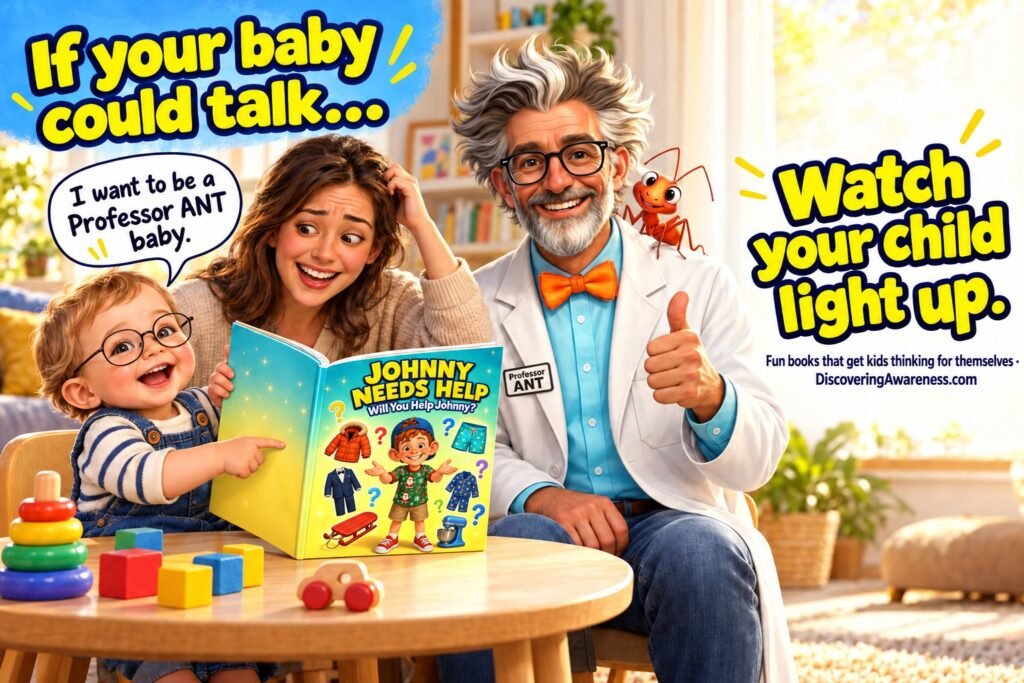
That’s exactly why I created the Needs Help! books. In each one, a character like Johnny, Chloe or Mateo needs your child’s help. Your child picks from smart and silly choices and explains why. You don’t point out the right answer. You let them think, choose and talk it through.
Later, when you’re headed to a real store, you don’t need a lecture. Just ask, “Remember what you decided Johnny should do at the store?” Now the rule belongs to your child, not you.
“Are you following your own orders?”
Before you go in, ask your child how they should behave, and how you should behave too. Now good behavior isn’t just a rule handed down. It’s something you both agreed on.
If your child starts acting up, catch it early. Calmly ask, “You told me how you’d behave. Are you following your own orders?” You’re not giving a command. You’re pointing them back to their own choice. That’s self-discipline.
If it keeps happening, the store can wait until they’re ready. That’s not a punishment. It’s just a sign they need a little more time.
Skip the bribe
Don’t say, “Be good and you’ll get a treat.” That turns good behavior into something you have to buy. Instead, if your child does well, surprise them afterward. The reward celebrates their choice instead of paying for it.
The goal
Your authority has an expiration date. One day your child will make choices when you’re not there. The goal isn’t a child who obeys forever. It’s a person who can guide their own mind.
Stop controlling. Start guiding how their mind develops.
— Professor ANT
What’s next? If your child already loves Needs Help!, the Senses Series is the next step. If you’re just starting out, it’s a fun first step into critical thinking. Does Your Nose Smell? starts with a funny question and lets your child figure out the answer, with real science and plenty of laughs. Flip it over for Does Your Tongue Taste Good? Ages 4–8. Get it on Amazon → or see all Professor ANT books.
